top of page
0E894493-1EDE-4A71-8B7B-4E182C55A913.jpe

Mission Statement

Introduce novel ideas for scalable seaweed blue carbon offsets that are ecologically, culturally and economically sound.

Home: Welcome
Introduction to The Seaweed Solution
Home: Video Player

Who We Are

We are a team of six 2020 honours students in marine biology, engineering and product design from the University of Canterbury determined to make an impact. Motivated by the climate crisis The Seaweed Solution is exploring innovative and ecological sound aquaculture solutions to biodiversity and climate challenges. The Seaweed Solution was Founded after winning the 2019 UCE Social Enterprise Competition and excited to be able to present innovative concepts without constraints on our ambition. As a team of young students we are not afraid to provide bold and novel ideas which are needed to address the scale of environmental damage we are facing. 

​

As the land use competition between forestry and farmland heats up and the demand for carbon credits grows exponentially our first concept is for offshore seaweed carbon credits. There has yet to be any deep sea aquaculture globally or any marine carbon credits sold and we aim to pioneer on both these fronts. Our research interest is orientated toward offshore carbon credits and the growing need for marine permaculture and multitrophic aquaculture. 

mussels.PNG
107376757_590129515030418_12094300109775
Capture.PNG
Home: Who We Are

Why Seaweed?

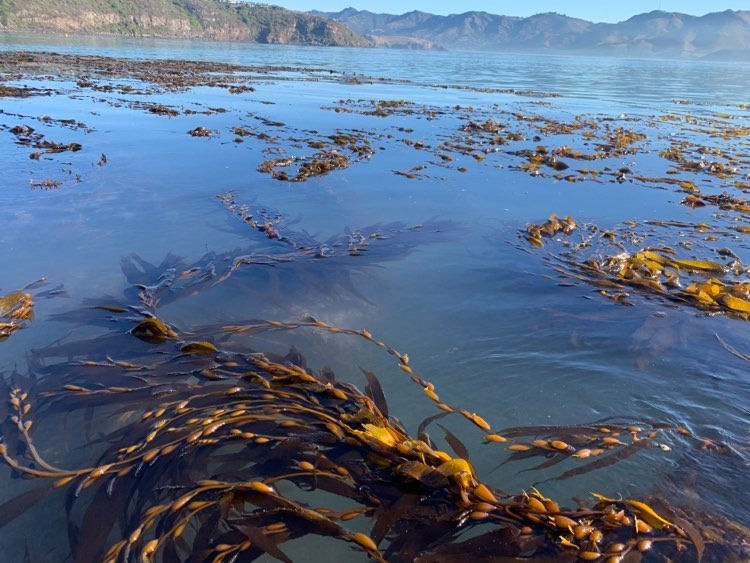
- Fastest growing organism the planet at up to 0.5 meters a day!

- New Zealand has 900+ species, we only know the properties of a fraction of them 

- Alleviates Ocean acidification

- Provides habitat for fisheries 

- Alleviates Eutrophication 

- Biodiversity benefits 

- Provides jobs in a growing sector

- Many product opportunities, fertiliser, biofuel, bioplastic, pharmaceuticals, food and methane reducers in stock are a few. 

​

Home: About Us
Capture.PNG

Coming Up With a Design

Chronological Progress

Many potential ideas were taken into consideration with the highlights in the gallery below. The goal is to grow seaweed via a submerged structure such that the growth region remains in the photic zone. 

​

Home: What We Do

Initial Sketching

​

1. Pontoon with chains leading to a base growth platform made of criss-cross pattern rope to grow seaweed

2. A rigid structure attached to salmon farm to grow seaweed in varying depth

3. Growing seaweed across rope on an existing oil rig 

4,5 & 6. A network of structures intended to be condensed under a floating and anchorage system. 

7. A rigid structure capable of hinging to vary seaweed position to maximise nutrition retention.

​

Chosen Designs

Of the multiple ideas, the bamboo pyramid was chosen for our carbon credit design. 
The motivation behind choosing the structure in the shape depicted is due to the feasibility to build and the ability to distribute multiaxial stresses of oceanic environments.
The structure would be attached by rope to a surface flotation mechanism and be condensed such that to maximise growth area. 
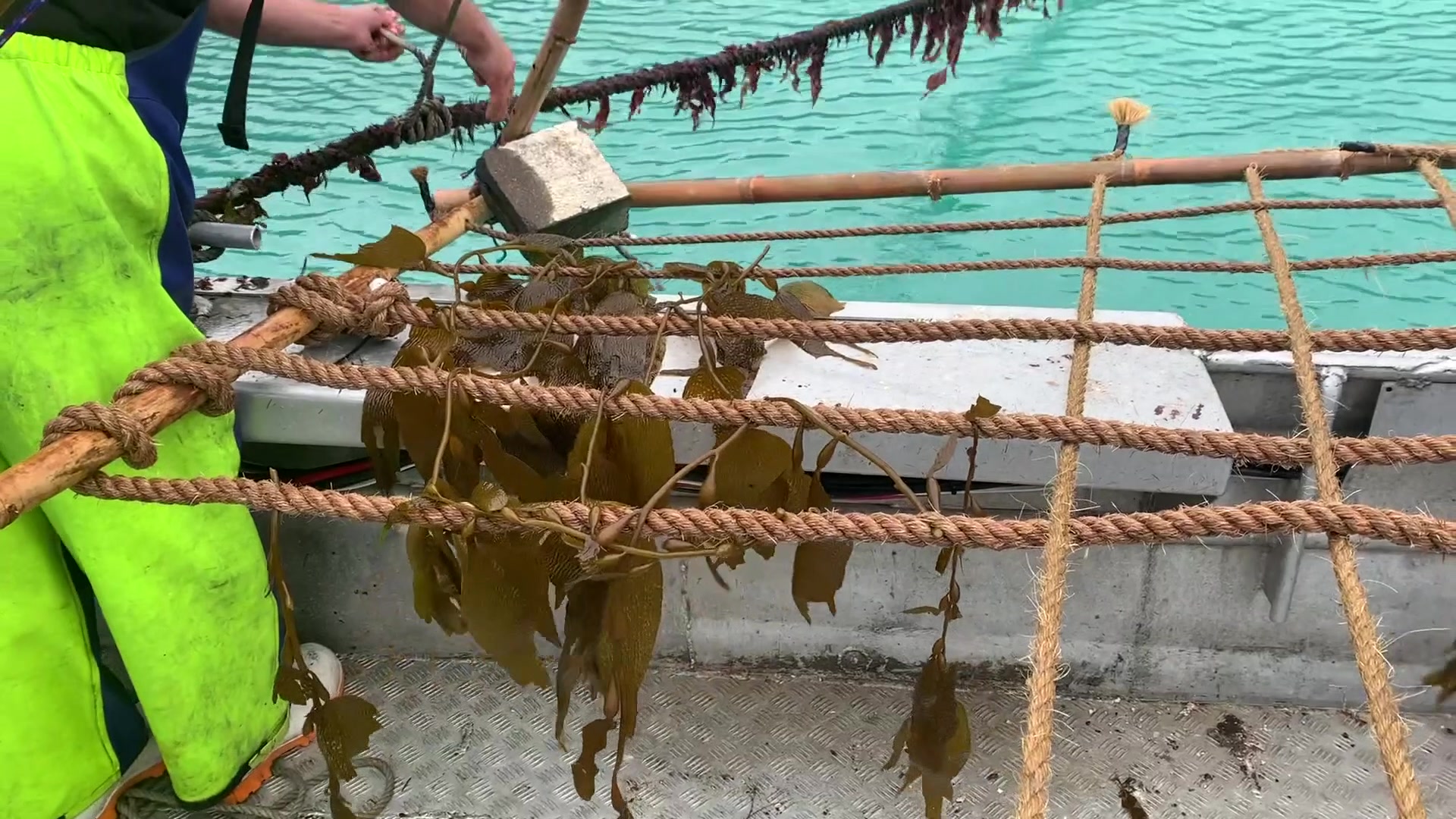
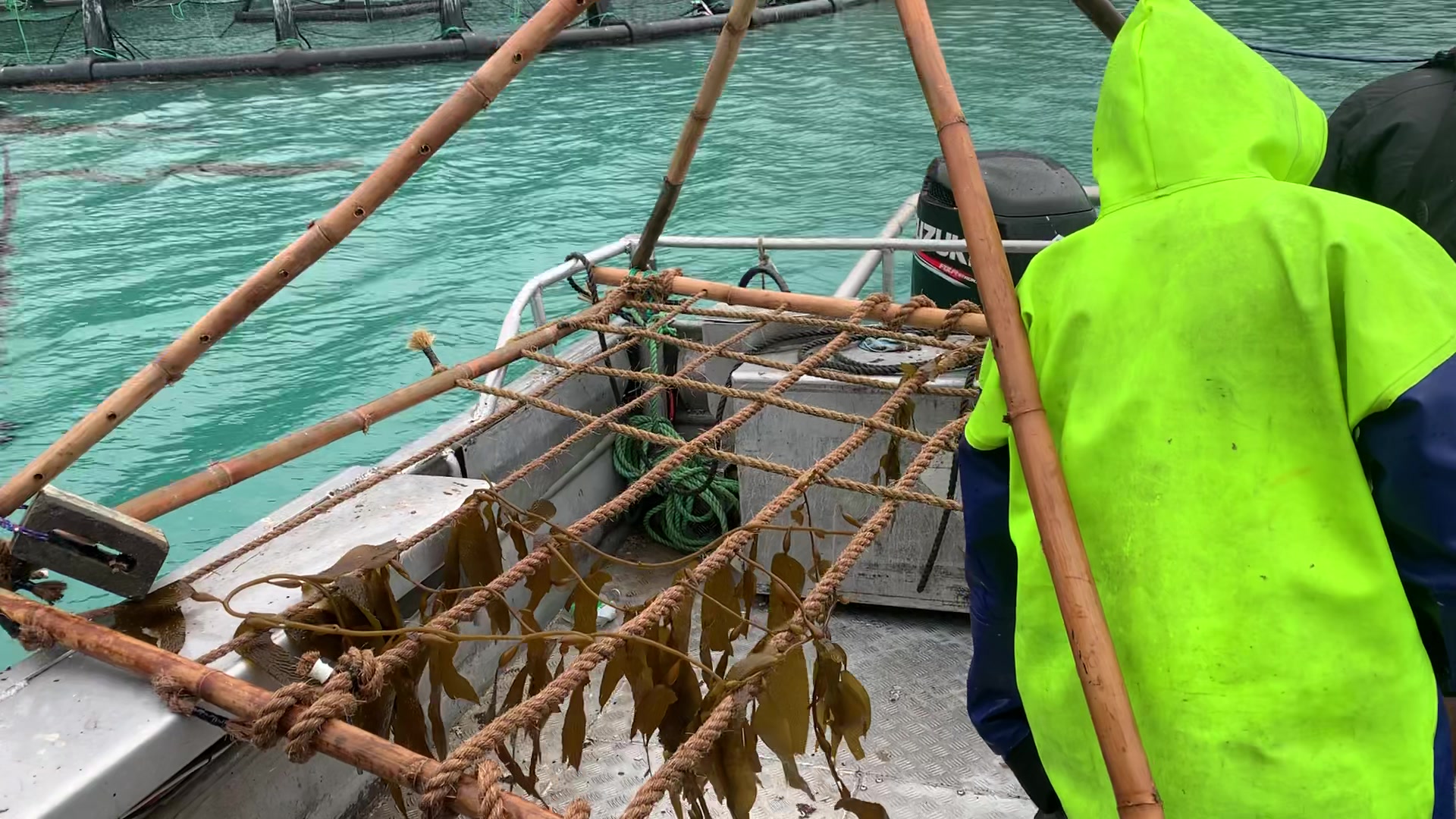
The structure would be made entirely of biodegradable materials, where the frame was made of bamboo, connection points cut and tied with rope and base platform to grow seaweed also made of rope
(describe the design, materials etc)
Prototype was built acccordingly.(elaborate)

Prototype Construction

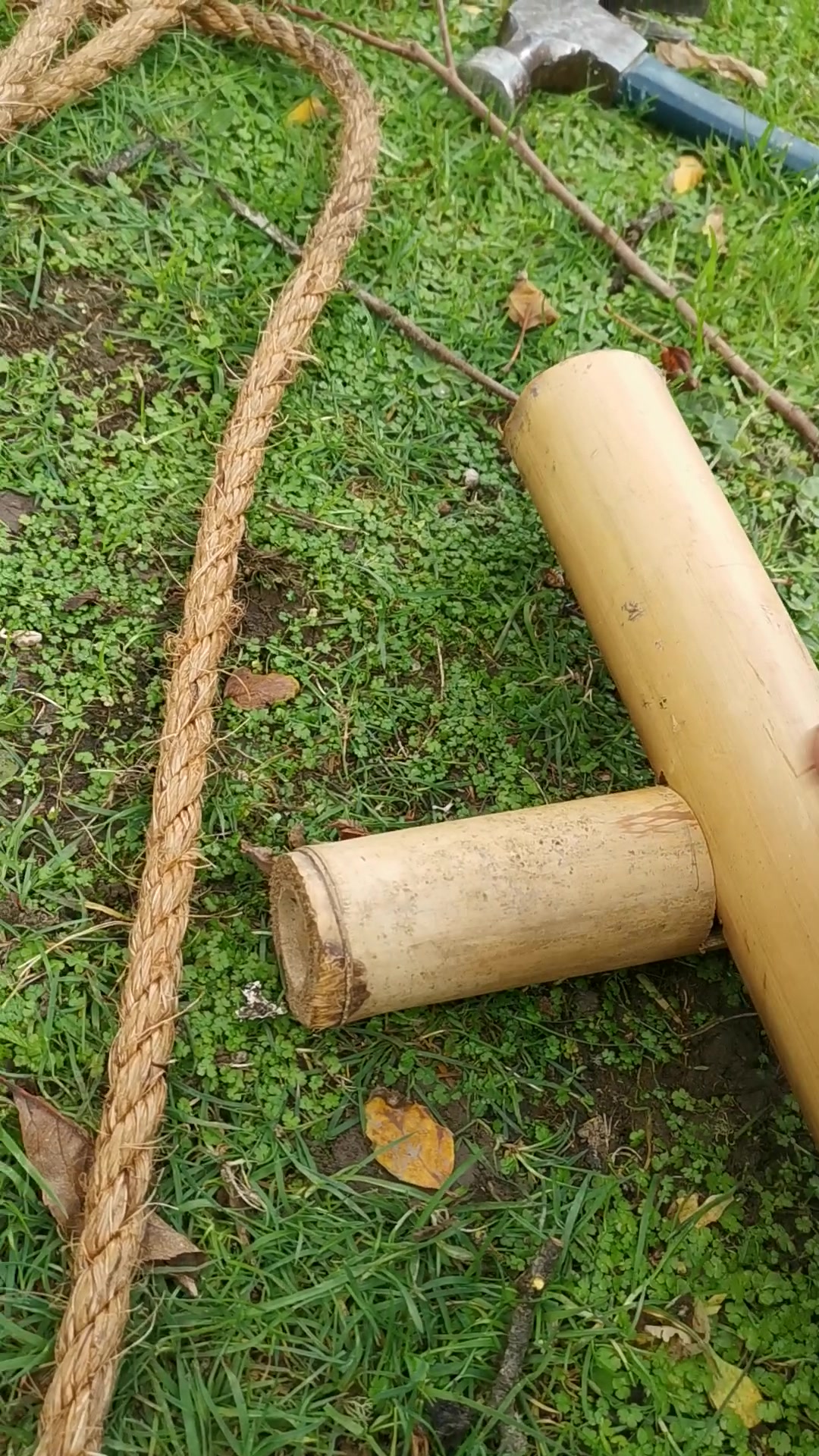
Slots were cut into the bamboo poles that made up the base for ease of locating and to reduce lateral movement. 
Square and diagonal lashings, reef knots, clove hitches and many more were used to secure the bamboo poles together.
Two weights were placed diagonally across from each other on the corner of the structure to counter the natural buoyancy of the bamboo.
Two holes were drilled into each segment of bamboo to allow water to flow into them which also aided in reducing the buoyancy of the structure.

Deployment in Akaroa

Deployment in Akaroa.
The team alongside Akaroa Salmon deployed the prototype on the 7th of July

Offshore Blue Carbon - How it works

The top layer of the ocean exchanges carbon very readily with the atmosphere. So to store carbon long term in the ocean you need to sink it below 1000m. Our plan is not to fight nature with a giant anchor and offshore platform but to have many free floating biodegradable structures. Each pyramid is essentially a carbon capsule made of bamboo and hemp rope (two of the fastest land carbon sinks). The pyramids are seeded with seaweed spores and dropped offshore in nutrient rich zones. They float with a bladder on the top of the pyramid for up to 8 months growing seaweed and are tracked with a geotag microchip. The attachment between the bladder and pyramid degrades after 8 months. The carbon capsule then sinks to the deep ocean to hypoxic dead zones and is sold as a carbon credit.

​

Home: Get Involved
All Videos

All Videos

All Categories

Introduction to The Seaweed Solution

Slots Cut

Structure on Boat

Home: Video
Home: Pro Gallery

Multitrophic Permaculture - Future plan

Capture.PNG

The future plan for the design is to design an artificial ecosystem encompassing salmon, mussels, seaweed and sea cucumber which are co-dependant on each other for nutrition. 
With this, we would be able to populate what essentially is an ocean desert with a sustainable population of marine aquaculture such that the carbon issue can be addressed at the same time providing a marketable food source.

Home: What We Do
P6%20MOODBOARD_edited.jpg

New Design Developed for the Carbon Capsule

09/12/2020

Oceanic free-floating biodegradable structure to grow Macrocystis pyrifera (giant kelp) as a means of ‘carbon farming’. The structure sinks after 90-250 days and stores the sequestered carbon at the bottom of the ocean. The structure is designed to facilitate the first ‘Blue Carbon’ credit in the world and would be the first deep sea aquaculture globally.  Ideation, development and refinement design stages were completed to design the structure and buoy alongside ways for the structure to sink.

Home: Image
P4 ABSTRACT.jpg
Home: Image
P9 CONCEPTS.jpg
Home: Image
P16 USP.jpg
Home: Image
P17 USP.jpg
Home: Image
P14 HEROSHOT.jpg
Home: Image
P12 FEATURES.jpg
Home: Image
P15 TECH DRAWING.jpg
Home: Image
P18 MANUFACTURING.jpg
Home: Image
P19 MANUFACTURING.jpg
Home: Image

Files

Available for Download

Mid Year Report

29/05/2020

Download

A5 Summary Portfolio

09/11/2020

A3 Final Portfolio

26/10/2020

Home: Files

Contact The Seaweed Solution

University of Canterbury,
20 Kirkwood Avenue, Upper Riccarton, Christchurch 8041

  • Facebook
  • Twitter
  • LinkedIn

Thanks for submitting!

FINAL POSTER(1).jpg
Home: Contact
Home: Blog Feed
  • Facebook
  • Twitter
  • LinkedIn

©2020 by The Seaweed Solution. Proudly created with Wix.com

bottom of page